


Durham University plays key role in world’s most detailed 3D map of the universe
- Apr 29
- 2 min read
Researchers from Durham University are playing a central role in one of the most significant global astronomy projects to date, contributing to the creation of the world’s most detailed 3D map of the universe. Working alongside international partners, Durham’s experts are helping to map the large-scale structure of the cosmos with unprecedented precision,strengthening the North East’s reputation as a centre of excellence for space science and advanced research.
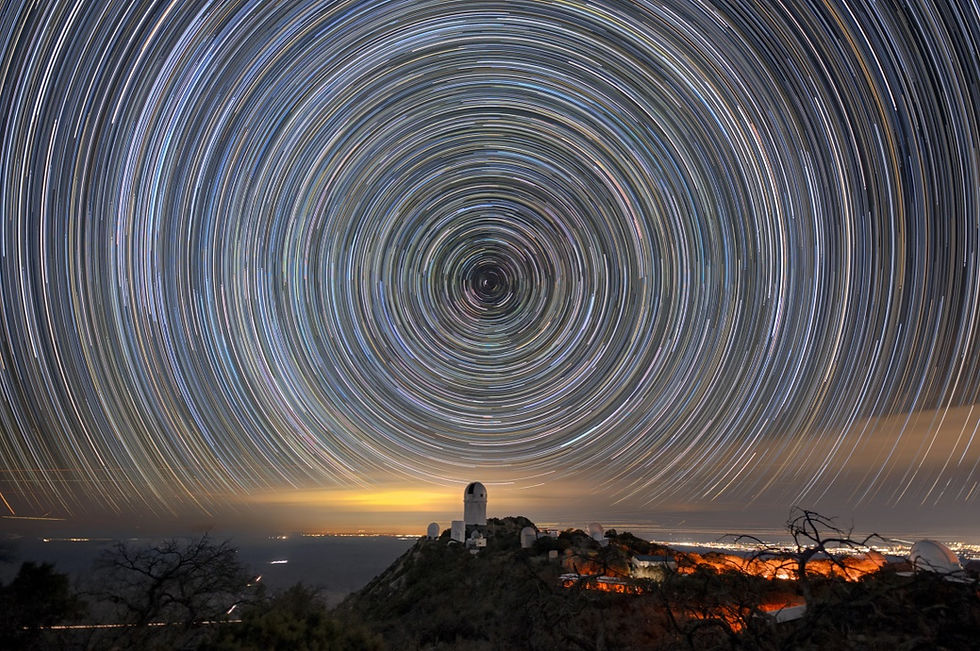
The Dark Energy Spectroscopic Instrument (DESI) survey, one of the most extensive surveys of the cosmos ever conducted, finished all observations for its originally planned 3D map of the universe.
DESI has completed its planned five-year mission and mapped more than 47 million galaxies and quasars, creating the largest high-resolution 3D map of our universe to date.
Because of the instrument’s excellent performance and hints that the dark energy responsible for the accelerated expansion of the Universe might be evolving, DESI will continue observations into 2028 and further expand the map.
UK scientists have played a significant role throughout the project, including major contributions to data analysis, cosmological modelling and instrumentation.
Professor Carlos Frenk, the Ogden Professor of Fundamental Physics at the Institute for Computational Cosmology, Durham University, and a member of the DESI institutional board said:
“Only 10 years ago I would have thought that measuring the rate at which the Universe expands with an accuracy of one percent was just fantasy. Yet, DESI has done it! The amount and quality of the DESI data and the analysis carried out by an international team of very talented scientists is behind this achievement. The rewards are huge: the data suggest an unexpected behaviour of the dark energy that may upturn the currently accepted view of how our universe evolves.
“Durham has played a major role in DESI with Durham researchers leading major parts of the analysis, including the determination of the mass of neutrinos, elementary particles that make up a small fraction of the Universe's dark matter.”
Professor Rita Tojeiro, School of Physics and Astronomy at the University of St Andrews, and member of the DESI collaboration said:
“What is fantastic about DESI, in addition to being a revolutionary cosmology survey, is that this new three-dimensional map is enabling world-class legacy science. Each of the 47 million galaxies and quasars that DESI observed tells a unique story. We can collect these individual stories to reveal the overarching narratives of how galaxies form and evolve through cosmic time. Because DESI is revealing the three-dimensional cosmic web in which galaxies live with unprecedented detail, we can now study how galaxies respond to cosmic structures around them in ways that have not been possible before.”


